

Physiotherapy under the NDIS isn’t just about treating pain. At its best, it’s about building the strength, movement skills and confidence that make daily life easier — getting out of bed, transferring safely, walking to the letterbox, keeping up with the kids, or feeling steady enough to enjoy your community again.
If you’re an NDIS participant (or you support someone who is), understanding how physiotherapy fits into your plan can help you use funding more effectively and see better outcomes over time.
TL;DR
- NDIS physio supports function, independence and participation — not just symptom relief.
- It’s commonly funded under Capacity Building, especially Improved Daily Living for assessment, training and therapy.
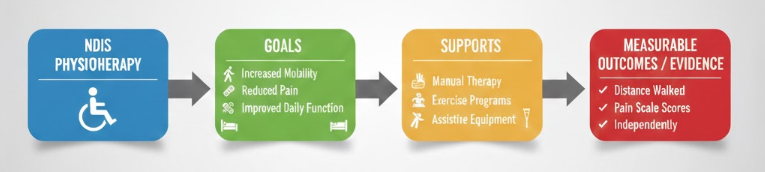
- The strongest results come from clear goals, measurable progress and a plan that fits real life.
What NDIS physiotherapy is really for
The NDIS funds supports that relate to a participant’s disability and help them pursue goals, increase independence and improve participation.
Physiotherapy fits well here because it can directly improve:
- Mobility and movement
- Transfers and daily tasks
- Strength, balance and endurance
- Pain that limits function
- Confidence in safe movement
Therapy supports funded by the NDIS are expected to be evidence-based and delivered by qualified professionals.
Where physiotherapy usually sits in your plan
Many participants access physiotherapy through Capacity Building categories. A common one is:
- Improved Daily Living (CB Daily Activity) — assessment, training or therapy that helps increase skills, independence and community participation.
Depending on your goals, physio may also align with:
- Improved Health & Wellbeing (where disability impacts health and function).
Your plan management type also matters for booking:
- Self-managed: you can choose any suitably qualified provider and may pay above price limits, but therapy still needs to be delivered by a qualified professional.
- Plan-managed: you can use registered or non-registered providers (depending on your plan manager’s processes).
NDIA-managed: you’ll generally need a registered provider.
What physiotherapy can help with (real-world outcomes)
A good NDIS physio plan should connect to everyday wins, not vague goals.
Mobility and walking
Physio can support:
- safer walking indoors and outdoors
- improved endurance for community access
- confidence on uneven surfaces, slopes or stairs
Strength and daily independence
This might include:
- sit-to-stand training
- floor-to-stand strategies
- safe transfers in and out of bed, car or shower
- upper-limb strength for self-care
Balance and falls risk
Balance and strength work can be crucial for participants whose disability increases falls risk. Programs are typically progressive and practical, focusing on what you actually do day to day.
Disability-related pain and stiffness
Physio may assist when pain reduces participation or function. The key is demonstrating the disability link and functional benefit, which is central to “reasonable and necessary” decision-making.
Assistive technology (AT) support
Physios may contribute to:
- mobility aid selection
- seating and postural recommendations
functional assessments that support AT decisions
Allied health input is often important when evidence is needed to show what is appropriate and why.
The “reasonable and necessary” lens (in plain English)
When the NDIA assesses supports, they consider whether a service:
- is related to disability
- is likely to be effective
- represents value for money
- supports your goals
- complements, rather than duplicates, other systems and informal supports.
Since legislative changes that commenced in 2024, the scheme has also emphasised that supports must relate to the impairments that met access requirements.
That doesn’t mean physio is harder to access — it just makes clear clinical reasoning and goal alignment even more important.

How to get the most from your NDIS physio
Here’s what often separates “some improvement” from “life-changing progress”:
1. Set functional goals that actually matter to you
Good examples:
- “Walk to the shops with one rest break.”
- “Transfer independently from bed to wheelchair.”
- “Use stairs safely to access my home.”
- “Improve shoulder function to dress without assistance.”
2. Track measurable progress
This might include:
- walking distance
- balance tests
- strength targets
- task-based milestones
This kind of evidence helps with plan reviews and reassessments.
3. Make the plan fit your life
The best programs are designed around:
- your routines
- your environment
- your supports
- your motivation and energy patterns
4. Use a collaborative care approach
Physios can coordinate (with consent) with:
- support coordinators
- OT, speech, psychology
GPs and specialists
This helps reduce duplicated effort and keeps the plan focused on your biggest priorities.
Common misconceptions
“NDIS physio is only for pain.”
Pain can be part of the picture. But the stronger funding rationale is usually function and participation.
“I need heaps of paperwork before I can start.”
Often you can start with your existing plan and goals. Your physio can then provide clearer evidence if additional therapy is needed.
“If I’m self-managed, I can use anyone.”
You have more choice — but therapy supports still need to be delivered by appropriately qualified professionals.
Yes, when it relates to your disability and is considered reasonable and necessary. It’s often used to build or maintain independence, mobility and participation.
Physiotherapy commonly sits under Capacity Building, especially Improved Daily Living, which includes assessment, training and therapy to increase skills and independence.
Not usually for NDIS-funded physio. What you’ll need is a plan that includes relevant funding and goals. A physio assessment can help clarify how therapy aligns to your plan.
Yes. Allied health providers often provide assessments and evidence that inform planning and review decisions.
In simple terms, capacity building focuses on developing new skills and independence, while maintenance can help preserve existing function when decline is a risk. The NDIS therapy guidance recognises both approaches depending on circumstances.
A good starting point is clarifying your functional goals and how physio will help you achieve them. The NDIA looks for disability relevance, effectiveness and value for money.

Key takeaways
- NDIS physiotherapy is most powerful when it’s tied to real functional goals.
- It often sits under Improved Daily Living within Capacity Building.
- Clear outcomes and evidence support stronger plan use and smoother reviews.
- The core test remains: disability-related, effective, and aligned to goals.
Conclusion
Physiotherapy can be one of the most practical, confidence-building supports in an NDIS plan — because it meets you right where life happens. Whether your goal is to walk more safely, transfer more independently, reduce disability-related pain, or participate in your community with less fear, a structured physio plan can be a genuine turning point.
If you’re ready to start, the next best step is a focused assessment that connects your goals to a clear, measurable pathway forward.