
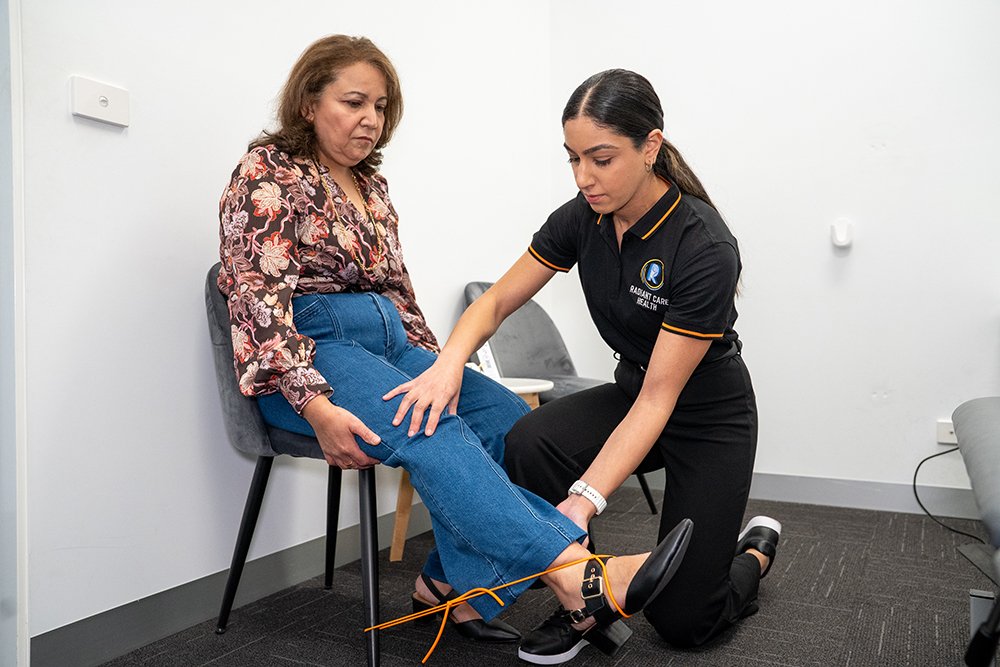
If you’ve been told you have “wear and tear” or knee osteoarthritis, it’s easy to assume the only options are painkillers or a joint replacement. That’s not the case. Strong evidence shows the right exercise and education can reduce pain, improve how your knee moves, and help many people delay — or avoid altogether — surgery they thought was inevitable.
Here’s what that looks like, including a structured program built specifically for it that we run at our Mernda and Reservoir clinics.
TL;DR
- Knee osteoarthritis is common and manageable — it’s not a sentence to inactivity or surgery.
- Exercise is a recommended first-line treatment, and it works.
- The GLA:D® program is an evidence-based education and exercise program designed for hip and knee osteoarthritis.
- Staying strong and active protects your knee, rather than wearing it out.
What is knee osteoarthritis?
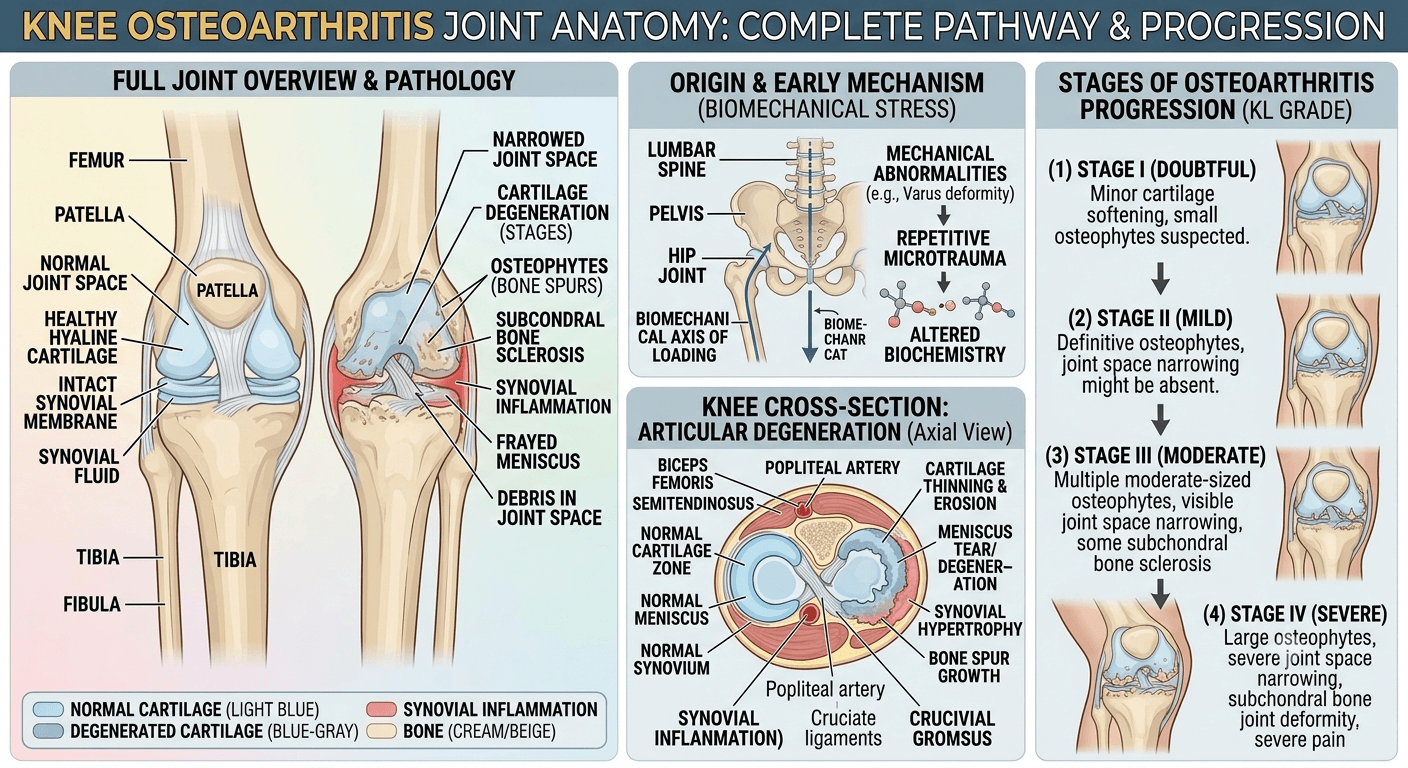
Osteoarthritis (OA) is a change in the joint where the cartilage that cushions the bones gradually thins, and the joint becomes more sensitive. It’s often described as “wear and tear”, but that phrase is misleading — joints are living tissue that respond to load, and the right amount of movement actually helps them stay healthy.
Common symptoms include:
- Knee pain with activity, or after rest (“first-step” stiffness)
- Stiffness, especially in the morning or after sitting
- Swelling, or a grinding sensation
- Difficulty with stairs, squatting, or getting out of chairs
The biggest myth: “I should rest it”
Many people avoid activity because they worry movement is “wearing the joint out further”. The evidence points the other way. Appropriate exercise:
- Strengthens the muscles that support and protect the knee
- Reduces pain and improves how the joint moves
- Helps with weight management, which lowers the load going through the joint
- Builds confidence and keeps you doing the things you enjoy
Avoiding movement, on the other hand, tends to lead to weaker muscles, stiffer joints, and often more pain over time. In fact, exercise and education are recommended as first-line treatment for knee osteoarthritis in Australian clinical guidelines — ahead of scans, injections or surgery for most people.
What good treatment looks like
Effective, guideline-based care for knee OA usually combines:
• Education — understanding your knee and what helps
• Strengthening — for the thigh, hip and calf muscles that support the knee
• Movement and load management — finding the right amount of activity and building it up gradually
• Pain-management strategies — practical tools for flare-ups
What it usually does not need, at least initially, is a scan or surgery. Imaging often doesn’t match symptoms — plenty of people with significant changes on a scan have little pain, and vice versa — and many people do extremely well with conservative care.
The GLA:D® program
GLA:D® stands for Good Life with osteoArthritis: Denmark. It’s an evidence-based education and exercise program developed in Denmark and adapted for Australia (through La Trobe University) specifically for people with hip or knee osteoarthritis.
A typical GLA:D® program includes:
- An initial assessment of your knee and your goals
- Two education sessions on understanding and managing osteoarthritis day to day
- A series of supervised exercise sessions (commonly twice a week over about six weeks)
- Progress tracking so you can see your improvement
The outcomes are encouraging. Research from GLA:D® Australia reports an average pain reduction of around 36%, reduced reliance on pain medication, improved confidence in the joint, and a reduced desire for surgery among participants. For many people, it genuinely changes the conversation around their knee.
At Radiant Care Health, we deliver structured osteoarthritis care, including our GLA:D® Program, at our Mernda and Reservoir clinics, alongside personalised exercise programs tailored to you.
Can I avoid knee surgery?
Some people will still benefit from a knee replacement down the track — and that’s completely okay. But for many, structured exercise and education reduce pain and improve function enough to delay surgery, or to find it’s no longer needed.
And if you do go ahead with surgery later, going in stronger leads to a smoother recovery. The strength and movement you build now is never wasted — research even shows people who complete a program like GLA:D® before surgery can recover more quickly afterwards. Our post-surgery rehabilitation carries that work through.
When to get checked sooner
See your GP or physio promptly if you have:
- A knee that locks, gives way, or won’t straighten
- Significant swelling that comes on rapidly
- Knee pain following a specific injury or fall
- Fever, redness and heat in the joint (possible infection)
Funding your care
Depending on your situation, your osteoarthritis care may be supported through private health, a Medicare Chronic Disease Management plan (with a GP referral), or other funding pathways. We’re happy to help you understand what applies — see our Fees & Funding page or ask our team.
FAQs
Yes, with the right exercises at the right level. Some discomfort during and shortly after exercise is normal and not harmful. A physio helps you find the right starting point and build up safely.
No. Appropriate exercise strengthens and protects the joint. Inactivity is more likely to make things worse over time.
Usually not. Knee OA is generally diagnosed from your history and a physical assessment. Scans rarely change the initial plan.
For many people, structured exercise and education significantly reduce pain and improve function, which can delay or remove the need for surgery. Results vary, and we’ll always be honest about what’s realistic for you.
Many people feel improvements within a few weeks of consistent exercise, with continued gains over the program.
No. It suits anyone with hip or knee osteoarthritis symptoms who wants to move better and manage their pain — whether or not surgery is on the table.
Key takeaways
- Knee osteoarthritis is manageable — exercise is a proven first-line treatment.
- Movement protects your knee; avoiding activity tends to make things worse.
- The GLA:D® program offers a structured, evidence-based path to less pain and better function.
- Even if surgery comes later, getting strong now pays off.
Want to take pressure off your knees?
You have more control over knee osteoarthritis than you might think. Let’s build a plan that keeps you moving and doing what you love — ask us about the GLA:D® program.
Start your referral or book online — at our Mernda and Reservoir clinics.
Medical disclaimer: This article is general information only and isn’t a substitute for individual medical advice. Please see a qualified health professional for advice specific to your situation.