

If you’ve felt a sharp, shooting pain travel from your lower back through your buttock and down your leg, you may be dealing with sciatica. It can be alarming, and it can make sitting, standing, driving and sleeping genuinely miserable. The reassuring news: most sciatica settles with the right approach, and physiotherapy is one of the most effective ways to speed up recovery and reduce the chance of it coming back.
Here’s what’s actually going on, what helps, and when it’s worth getting assessed at our Mernda or Reservoir clinics.
TL;DR
- Sciatica is a symptom, not a diagnosis — it describes pain along the path of the sciatic nerve, usually from an irritated nerve in the lower back.Sciatica is a symptom, not a diagnosis — it describes pain along the path of the sciatic nerve, usually from an irritated nerve in the lower back.
- Most cases improve within a few weeks, and staying gently active beats bed rest.
- Physiotherapy eases the irritation, restores movement and builds the strength that prevents it returning.
- A few red-flag symptoms need urgent medical care — we list them below.
What is sciatica, really?
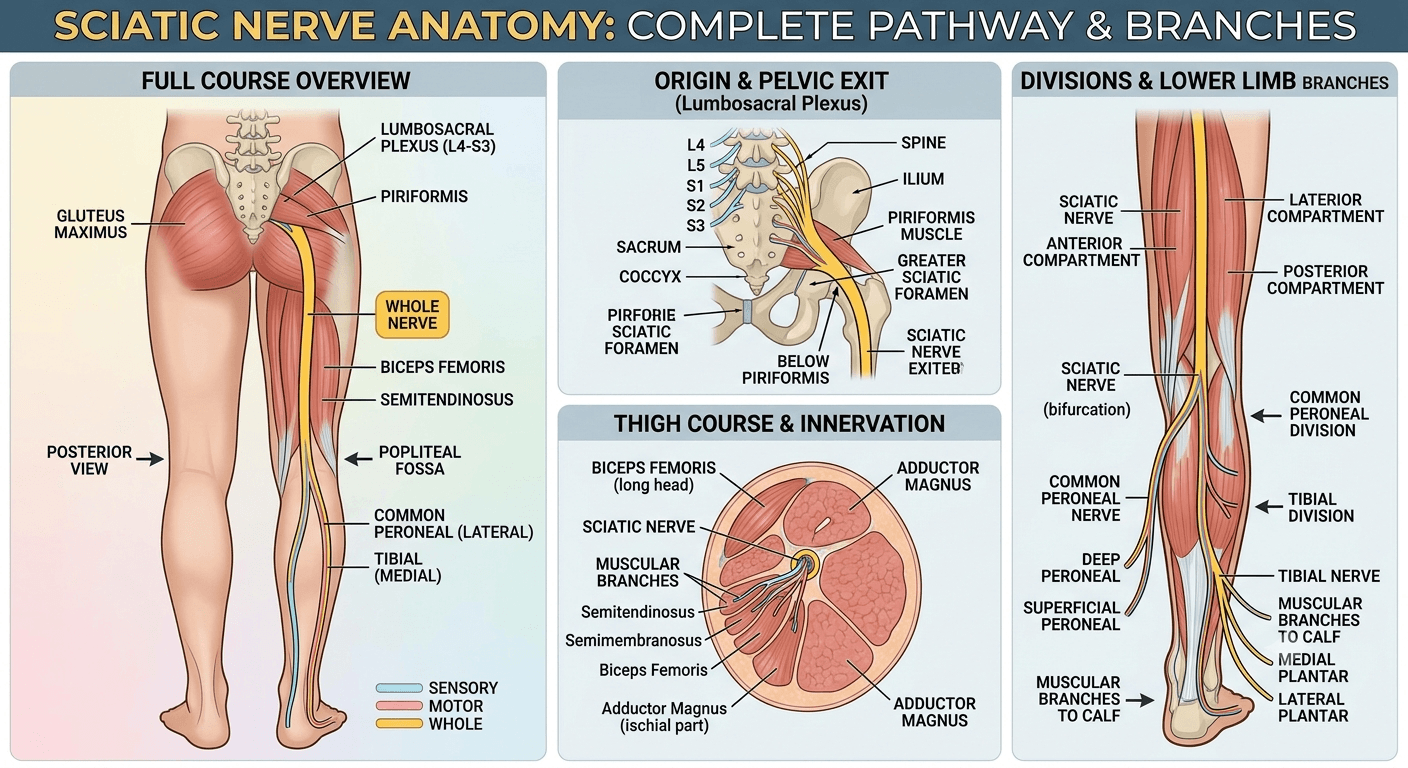
Sciatica refers to pain that travels along the sciatic nerve — the longest and widest nerve in the body, which runs from your lower back, through your buttock, and down the back of each leg. When something irritates or compresses one of the nerve roots in your lower spine, you can feel symptoms anywhere along that path.
People describe it in different ways:
- Sharp, burning or shooting pain down one leg
- Pins and needles, tingling or numbness
- A deep ache in the buttock or back of the thigh
- Pain that worsens with sitting, bending, coughing or sneezing
It usually affects one side, and the leg symptoms are often more bothersome than the back itself.
What causes sciatica?
Sciatica is most commonly caused by:
- A disc bulge or herniation pressing on or irritating a nerve root
- Age-related changes in the spine that narrow the space around the nerves
- Tight or irritated muscles deep in the buttock that affect the nearby nerve
- Sustained postures or sudden load — long drives, heavy or awkward lifting, or a sharp spike in activity
One important point: a disc “bulge” on a scan is extremely common, even in people with no pain at all. Pain is rarely about damage alone — it’s about how irritated and sensitive the area has become. That’s encouraging, because irritation settles.
What actually helps
Keep moving — gently
It’s tempting to lie down and wait it out, but prolonged rest tends to leave you stiffer and slower to recover. Gentle movement keeps the nerve gliding, the joints mobile and your confidence up. Short, frequent walks and regular position changes usually beat sitting still.
Find your easing positions
Most people have positions or movements that calm the leg pain. A physiotherapist can help you find yours and use them as a base to build from.
Targeted physiotherapy
This is where structured care makes the biggest difference. At Radiant Care Health, treatment for sciatica typically includes:
- Hands-on techniques and guided movement to reduce nerve irritation
- Specific exercises to restore mobility and gradually desensitise the nerve
- Progressive personalised exercise programs to strengthen your back, hips and core so the area copes with daily load
- Practical advice for sitting, driving, lifting and sleeping
- Dry needling, where appropriate, to help settle the muscular tension that often comes along with sciatica
The goal isn’t only to ease today’s pain — it’s to get you moving confidently again and lower the odds of it returning.
Is walking good for sciatica?
For most people, yes — gentle walking is one of the best things you can do. It keeps the spine and nerve moving without heavy loading. Start with shorter walks within comfort and build up gradually. If walking sharply increases your leg symptoms, ease back and check in with your physio, who can adjust your plan.

How long does sciatica last?
For many people, symptoms improve noticeably within a few weeks. Some settle faster; others take longer, particularly if symptoms have been building for months. The clearer your plan and the more consistent you are with your exercises, the smoother the recovery tends to be.
When to seek urgent care
Most sciatica is not dangerous. But see a doctor or go to your nearest emergency department straight away if you experience any of the following:
- Loss of bladder or bowel control
- Numbness around the groin, buttocks or inner thighs (the “saddle” area)
- Severe or rapidly worsening weakness in the leg or foot
- Sciatica that began after a significant fall or trauma
- Fever, unexplained weight loss, or a history of cancer alongside new back pain
These are uncommon, but they need prompt attention.
Physiotherapy for sciatica in Melbourne’s north
You don’t have to wait it out and hope. A clear assessment and a plan built around your body can make a real difference — often quickly. Our physiotherapists, Stephanie and Mau, see patients with sciatica and related back pain at both our Mernda (136 Schotters Rd) and Reservoir (224A Broadway) clinics, serving patients across Melbourne’s north and northern suburbs.
FAQs
Stay gently active within comfort. Brief rest during a severe flare is fine, but prolonged bed rest usually slows recovery.
Often not. Most sciatica is diagnosed from your history and a physical assessment. Scans are reserved for specific situations, which your physio or GP can guide you on.
Physiotherapy is one of the most effective approaches for easing symptoms, restoring movement and reducing recurrence. We tailor your plan to what’s driving your symptoms.
Common triggers include long periods of sitting, heavy or awkward lifting, and sudden spikes in activity. Part of your plan is learning to manage these so flare-ups become less frequent.
Either can help with comfort — use whichever feels better for you. Neither is “fixing” the nerve, but they can make movement easier.
It often improves over time, but the right plan speeds recovery and reduces the chance of it returning, especially if symptoms keep coming back.
Key takeaways
- Sciatica is irritation of the sciatic nerve, most often from the lower back — and it usually settles.
- Gentle movement beats bed rest, and walking is generally helpful.
- Physiotherapy eases symptoms and builds the strength that prevents recurrence.
- Know the red flags, and act on them if they appear.
Ready to ease your sciatica?
You don’t have to push through it. A clear assessment and a tailored plan can settle your symptoms and help keep them away.
Start your referral or book online — at our Mernda and Reservoir clinics.
Medical disclaimer: This article is general information only and isn’t a substitute for individual medical advice. Please see a qualified health professional for advice specific to your situation.