

A car accident — even a low-speed one — can leave you with a stiff, sore neck a day or two later. Whiplash is one of the most common injuries we help people recover from, and there’s a great deal you can do to recover well. If you’re in Victoria, your treatment may also be funded through the TAC (Transport Accident Commission). Here’s what to expect, and how we can help at our Mernda and Reservoir clinics.
TL;DR
- Whiplash is a neck injury from the rapid back-and-forth movement of a collision. Symptoms often appear a day or two later.
- Staying gently active and returning to normal movement early leads to better recovery than rest and a collar.
- Physiotherapy helps you move, settle symptoms, and rebuild confidence and strength.
- In Victoria, the TAC may fund your physiotherapy after a transport accident — and we can help you navigate it.
What is whiplash?
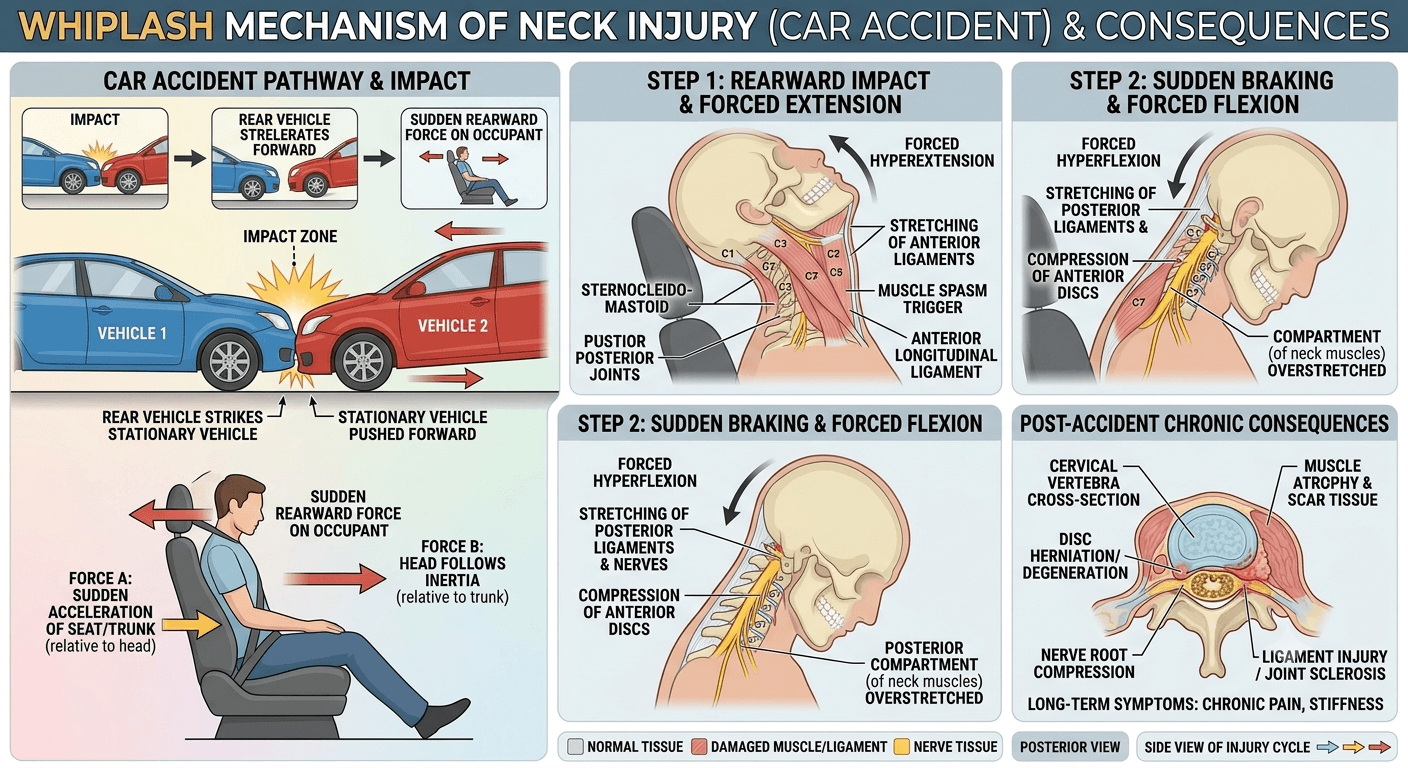
Whiplash — sometimes called a whiplash-associated disorder — is an injury to the neck caused by a sudden, forceful back-and-forth movement of the head, most often in a car accident. The muscles, ligaments and joints of the neck get overstretched and irritated.
Symptoms can include:
- Neck pain and stiffness
- Reduced movement, or pain turning your head
- Headaches, often starting at the base of the skull
- Pain or tightness across the shoulders and upper back
- Sometimes dizziness, or pain referring into the arms
Importantly, symptoms often don’t appear immediately. Many people feel fine straight after the accident and only notice pain and stiffness a day or two later as the body’s response sets in. That’s normal, and it doesn’t mean something is seriously wrong.
What helps recovery (and what doesn’t)
The evidence on whiplash is clear and, for most people, reassuring.
What helps:
- Staying gently active. Returning to normal movement early, within comfort, leads to faster recovery.
- Keeping your neck moving. Gentle range-of-movement exercises stop stiffness from settling in.
- Physiotherapy. Hands-on treatment, guided exercise and clear advice help symptoms settle and restore confidence.
- Understanding the injury. Knowing that hurt doesn’t equal harm reduces fear and helps you move more freely.
What tends to slow recovery:
- Prolonged rest and avoiding movement
- Long-term use of a soft collar (generally not recommended)
- Fear of moving the neck, which leads to stiffness and guarding
How physiotherapy helps
At Radiant Care Health, whiplash care is tailored to where you are in your recovery. It typically includes:
- A thorough assessment of your neck, movement and symptoms
- Hands-on techniques and gentle movement to ease pain and stiffness
- A graded exercise and rehabilitation program to restore range, strength and control
- Headache and posture-management strategies
- Dry needling, where appropriate, to help settle muscular tension
- Clear advice on returning to driving, work and daily activities
The aim is steady, confident progress back to your normal life — not just short-term symptom relief.

How long does whiplash take to heal?
Many people improve within a few weeks, though some take longer, and a smaller number develop more persistent symptoms. Early, active management gives you the best chance of a smooth recovery. If symptoms are lingering, that’s exactly when a structured physiotherapy plan is most valuable — so it’s worth getting assessed rather than waiting and hoping.
How TAC funding works in Victoria
If you’ve been injured in a transport accident in Victoria, the TAC may cover the cost of your physiotherapy and other treatment related to the accident. TAC covers accidents on Victorian roads involving cars, motorcycles, trucks, buses, trams, trains and bicycles — and you may be eligible regardless of who was at fault.
Here’s the general pathway:
- Report the accident. Make sure it’s reported to Victoria Police if it hasn’t been already — you’ll usually need a police report reference for your claim.
- Lodge your TAC claim. You can lodge online at tac.vic.gov.au, by phone, or through the hospital if you were admitted. There are time limits (generally within 12 months of the accident), so earlier is better.
- See your GP. Your GP assesses your injuries, helps document them, and acts as your primary treating practitioner who coordinates your care.
- Choose your physiotherapist. You have the right to choose your own provider. Let us know you’re a TAC client and give us your claim number, and we can confirm your claim and bill the TAC directly.
- Begin treatment. Once your claim is accepted and billing is confirmed, treatment can start. In fact, within the first 90 days after an accident, physiotherapy can usually proceed without needing prior TAC approval, as long as you have a claim number and the treatment relates to your accident injuries.
If your claim number hasn’t come through yet, you can still start treatment — some people pay privately in the meantime and are reimbursed once their claim is approved. We’ll always be upfront with you about this and about any gap, so there are no surprises.
The process can feel confusing while you’re also dealing with pain and disruption. We’re experienced with TAC clients and can help you understand what’s needed so you can focus on getting better. For the official, up-to-date claim process and rules, the TAC website is the best source of truth.
When to seek urgent care
After a car accident, seek immediate medical attention (or call emergency services) if you have:
- Severe neck pain with numbness, tingling or weakness in the arms or legs
- Loss of bladder or bowel control
- Severe headache, confusion, vomiting, or loss of consciousness
- Difficulty walking or problems with coordination
If you haven’t yet been medically assessed after a significant accident, see a doctor first.
Whiplash and TAC physiotherapy in Melbourne’s north
Whiplash can be unsettling, but recovery is very achievable with the right support — and you may not have to worry about the cost. We support TAC clients and treat neck and shoulder pain at both our Mernda (136 Schotters Rd) and Reservoir (224A Broadway) clinics.
FAQs
Many people improve within a few weeks, though some take longer. Early, active management leads to better outcomes.
Keep it gently moving within comfort. Prolonged rest and soft collars generally slow recovery.
Yes, that’s very common with whiplash. Delayed onset of neck pain and stiffness is typical and doesn’t mean something is seriously wrong.
If you have an accepted TAC claim related to your accident, the reasonable cost of physiotherapy for your accident injuries may be funded. We can help you understand the process and bill the TAC directly once you have a claim number; the TAC confirms eligibility.
You can start with a physiotherapy assessment. For TAC-funded care, your GP and the claim process are part of the pathway, and we’ll guide you through it.
TAC support is generally available regardless of who was at fault. Eligibility is confirmed by the TAC.
Key takeaways
- Whiplash is common after a collision, and symptoms often appear a day or two later.
- Gentle, early movement beats rest and collars.
- Physiotherapy helps you recover movement, strength and confidence.
- In Victoria, the TAC may fund your care — and we can help you navigate it.
Recovering from a car accident? We’re here to help
Whiplash can be unsettling, but recovery is very achievable with the right support. Let’s get you moving comfortably again.
Start your referral or call (03) 9001 8584 — at our Mernda and Reservoir clinics.
Medical disclaimer: This article is general information only and isn’t a substitute for individual medical advice. TAC processes and rules can change — for the official claim process, refer to the TAC at tac.vic.gov.au. Please see a qualified health professional for advice specific to your situation.