
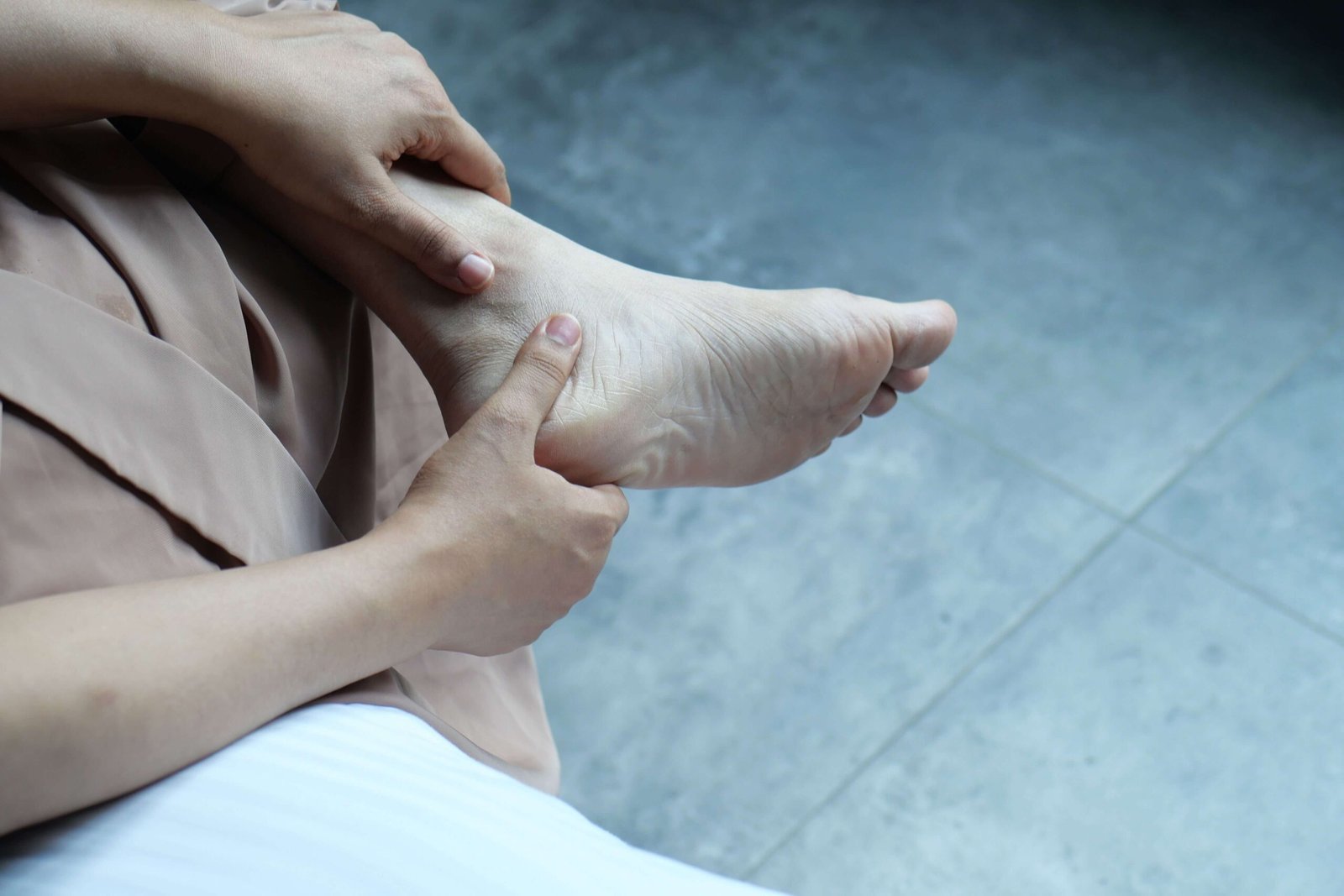
That sharp, stabbing pain in your heel as your feet hit the floor in the morning is one of the most recognisable complaints we see. It usually has a name: plantar fasciitis (more accurately, plantar heel pain). It can be stubborn — but it responds well to the right approach, and the earlier you start, the smoother the road.
Here’s what’s going on, and what genuinely helps, at our Mernda and Reservoir clinics.
TL;DR
- Sharp heel pain with your first steps in the morning is the hallmark of plantar fasciitis.
- It’s an overload of the tissue under your foot — not something that’s torn or permanently damaged.
- Loading the tissue correctly (with guidance), plus calf and foot strengthening, is the key to recovery.
- It can take time, so starting early and staying consistent matters.
What is plantar fasciitis?
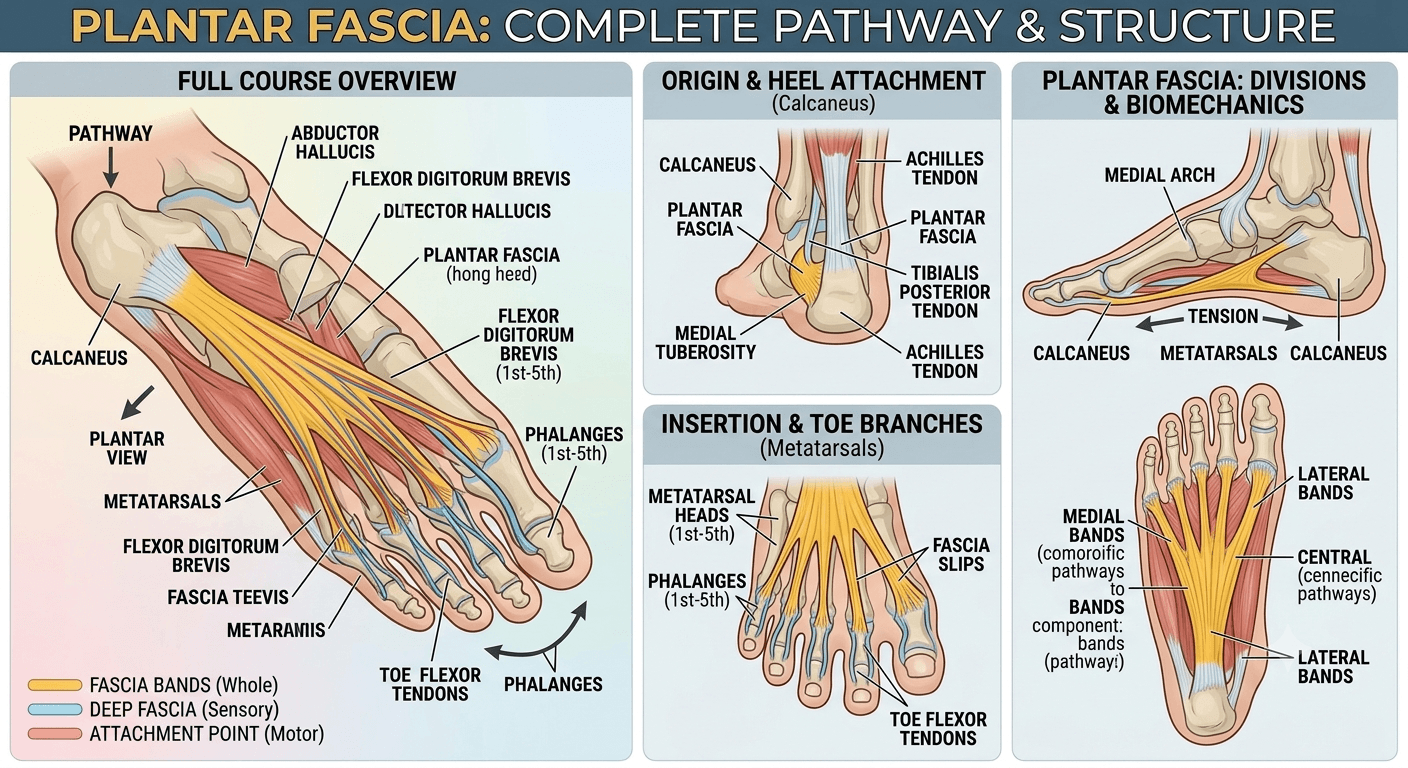
The plantar fascia is a thick band of tissue that runs along the sole of your foot, from your heel to the base of your toes. It supports your arch and helps your foot manage load with every step.
Plantar fasciitis develops when this tissue becomes overloaded and irritated — often where it attaches at the heel. Despite the “-itis” in the name, which implies inflammation, it’s now better understood as a tissue that’s been asked to do more than it’s currently conditioned for, with degenerative-type changes rather than pure inflammation.
The tell-tale signs
- Sharp or stabbing heel pain with your first steps in the morning, or after rest
- Pain that eases as you warm up, then returns after long periods on your feet
- Tenderness under the heel or along the arch
- Worse after standing, walking or running for long stretches
Why does it hurt most in the morning?
While you sleep, the plantar fascia and calf shorten and settle. Those first steps suddenly load and stretch the tissue, which is why the pain spikes — then eases as everything warms up and gets moving. It’s such a classic pattern that it’s one of the first things we ask about.
Why does it happen?
Plantar fasciitis is usually about load — too much, too soon, or too often for what the tissue is used to. Common contributors include:
- A sudden increase in walking, running or time on your feet
- A change in footwear, or walking a lot on hard surfaces
- Reduced calf or foot strength and flexibility
- Long hours standing at work
- Changes in activity, weight or training load
It’s rarely about one single cause — usually it’s a combination that tips the tissue past its current capacity.
What actually helps
Here’s the reassuring part: plantar fasciitis is very responsive to the right plan. Effective physiotherapy care typically includes:
Loading the tissue (the most important part)
Counterintuitively, the fix usually isn’t total rest — it’s the right kind of loading. Progressive strengthening that loads the plantar fascia and calf (for example, heel raises performed in a way that engages the foot) helps the tissue rebuild its capacity and tolerance. Research increasingly supports high-load strength work as one of the most effective parts of treatment. A physiotherapist sets the right level so you challenge the tissue without flaring it — too little does nothing, too much sets you back.
Calf and foot strengthening
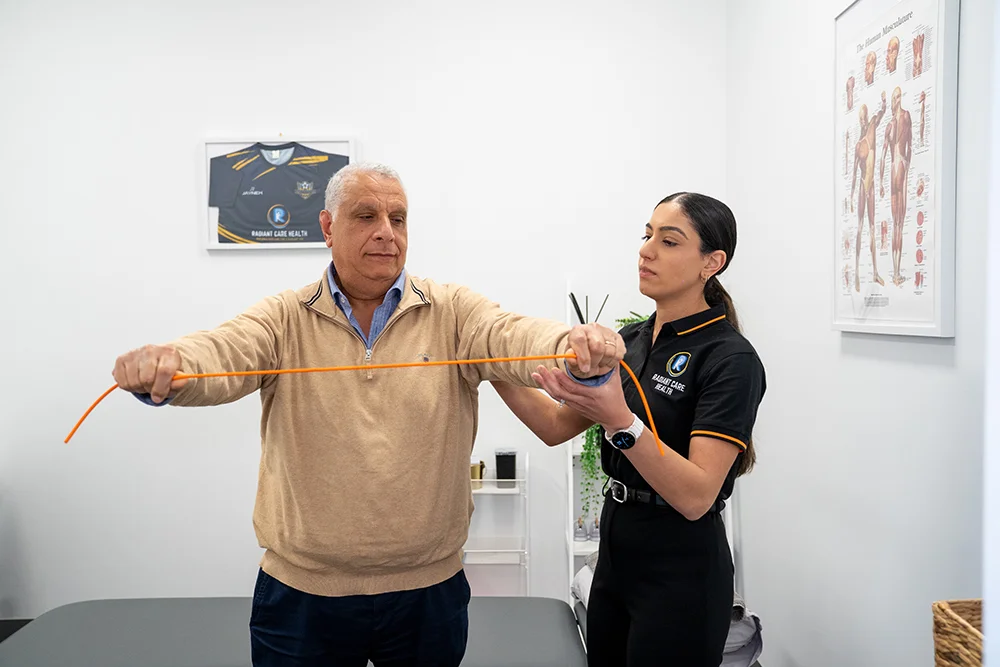
Strong calves and intrinsic foot muscles share the load and protect the heel. This is often the missing piece in recovery, and where a structured personalised exercise program makes the difference.
Load management
Adjusting how much you’re on your feet — temporarily — while you build capacity. Not stopping; modifying.
Footwear and support advice
Supportive footwear and, sometimes, temporary heel cushioning or taping can ease symptoms while the tissue settles.
Hands-on treatment and dry needling
Manual therapy and dry needling can help manage symptoms and tight calf muscles alongside your exercise plan.
How long does plantar fasciitis take to heal?
Honest answer: it can be persistent, and recovery is often measured in weeks to months rather than days — especially if it’s been there a while. Research suggests a meaningful number of people still have symptoms a year or two later if it isn’t managed well, which is exactly why starting early and loading correctly matters. With a consistent, well-guided plan, it reliably improves.
When heel pain needs a closer look
See a physio or GP if you have:
- Heel pain after a specific injury or fall
- Numbness, tingling or pins and needles in the foot
- Significant swelling, redness or heat
- Pain that’s worsening despite rest and care, or that wakes you at night
These may point to something other than plantar fasciitis, such as a nerve issue or a stress fracture.
Foot and heel pain physio in Melbourne’s north
Heel pain doesn’t have to be something you push through every morning. A clear plan tailored to your foot can settle it and stop it returning. We treat plantar fasciitis and related ankle and foot pain at both our Mernda (136 Schotters Rd) and Reservoir (224A Broadway) clinics — including for active adults and runners through our sports physiotherapy.
FAQs
No — complete rest tends to leave the tissue under-prepared, and pain often returns when you resume activity. Guided, progressive loading is more effective.
Sometimes they help in the short term, but they’re rarely the whole answer. Strengthening and load management address the underlying capacity issue.
The fascia tightens overnight, so the first steps load it suddenly. It typically eases as you warm up.
Often yes, with modified load. A physio helps you keep moving without flaring symptoms, and builds you back up safely.
It can, but it’s often slow and prone to returning without addressing the cause. The right plan speeds things up and reduces recurrence.
Not quite. Heel spurs often show up on scans without causing pain, and plantar fasciitis can occur without a spur. The spur is usually not the source of the problem.
Key takeaways
- Morning heel pain with your first steps is the classic sign of plantar fasciitis.
- It’s an overload issue, not permanent damage.
- Progressive loading plus calf and foot strengthening is the key — not complete rest.
- Start early, stay consistent, and recovery is very achievable.
Let’s get you back on your feet — comfortably
Heel pain is frustrating, but it’s very treatable with the right plan. Let’s settle it and keep it away.
Start your referral or book online — at our Mernda and Reservoir clinics.
Medical disclaimer: This article is general information only and isn’t a substitute for individual medical advice. Please see a qualified health professional for advice specific to your situation.